
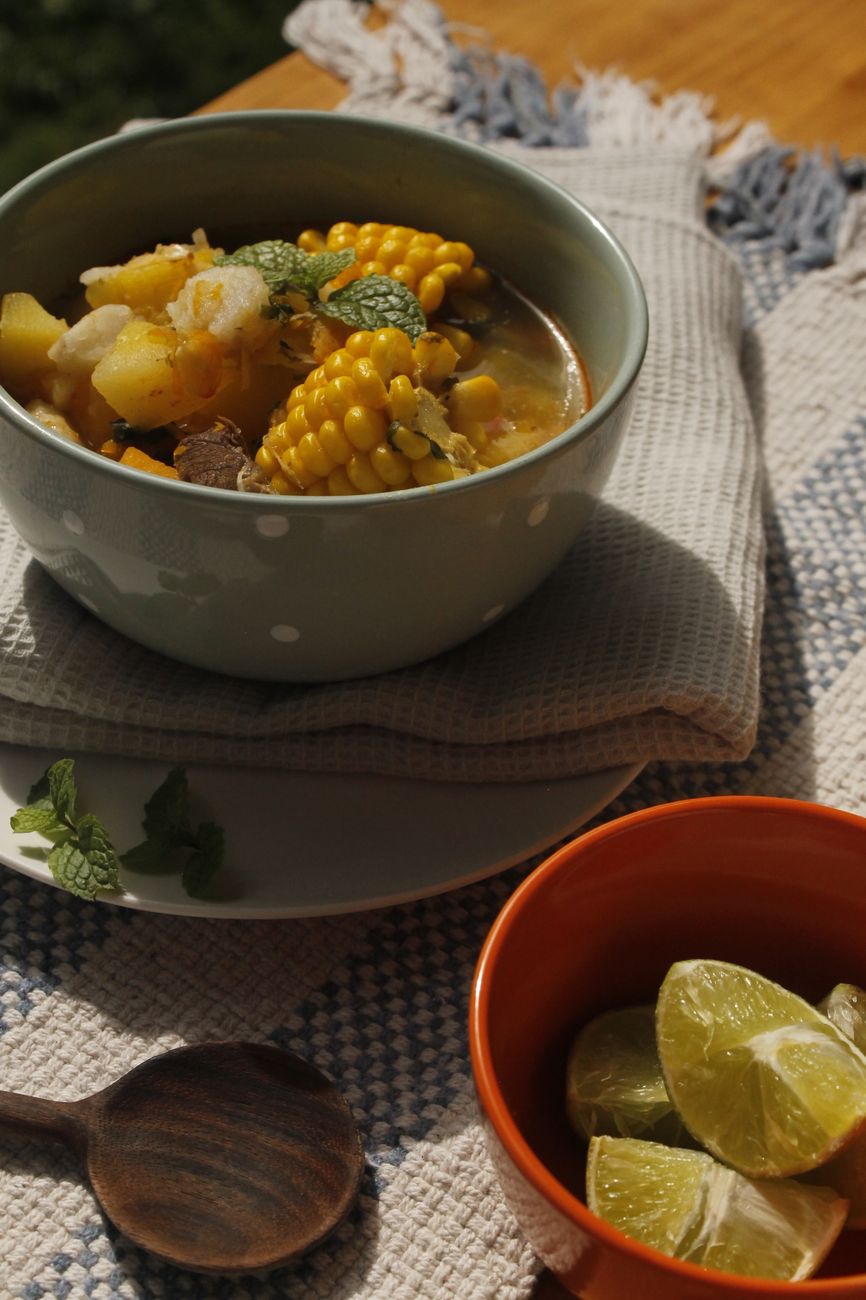
If there’s one dish that tells the story of Cuba, it’s ajiaco. Native corn and root vegetables, Spanish meats, African yams and plantains, all in the same pot. Fernando Ortiz famously compared the Cuban people themselves to an ajiaco: many ingredients, always simmering, never quite finished.
This is a big-pot, feed-everybody recipe, the kind you make on a weekend when the family is coming over. My grandmother insisted on having it for lunch every Monday at the famed Versailles restaurant in Miami-a special every week. Don’t let the long ingredient list scare you: most of the time is just the pot doing its thing.
Ajiaco Criollo
Serves: about 12 · Prep: 45 minutes, plus soaking the tasajo overnight · Cook: about 3 1/2 hours
Ingredients
Meats
- 1/2 lb tasajo (salt-dried beef), cut in 3 or 4 pieces (see notes)
- 1/2 chicken (about 2 lb), cut in 2 pieces
- 1 lb beef flank steak (falda)
- 1 lb boneless pork shoulder, cut in chunks
- 1 lb pork neck bones or country-style ribs
- About 7 quarts water
Viandas (root vegetables and plantains)
- 2 ears corn, cut in 2-inch rounds
- 1/2 lb yellow malanga
- 1/2 lb white malanga
- 1/2 lb ñame (yam)
- 1 lb yuca
- 1 lb boniato (Cuban sweet potato)
- 2 green plantains
- 2 ripe plantains
- 2 limes
Sofrito
- 2 tablespoons lard or oil
- 1 large onion, chopped
- 3 cloves garlic, crushed
- 1 large green bell pepper, chopped
- 1 can (8 oz) tomato sauce
- About 2 tablespoons salt, to taste
Bolitas de maíz (corn dumplings)
- 1 lb fresh corn kernels, ground in a blender or food processor (about 3 cups)
- 2 tablespoons lard or oil
- 2 cloves garlic
- 2 tablespoons milk
- 1 teaspoon salt
Instructions
- The night before: cover the tasajo with water and let it soak overnight. In the morning, drain it and throw out the water.
- Put the tasajo and chicken in your biggest pot with the water and bring it to a boil. Simmer for about 1 hour.
- Add the flank steak, pork shoulder and pork bones and simmer for about 1 hour more, skimming off foam and some of the fat as it rises.
- While the meats cook, make the sofrito: heat the lard or oil and cook the onion, garlic and pepper until soft, then stir in the tomato sauce. Peel the viandas and cut them in large chunks. Keep the cut plantains in water with a squeeze of lime so they don’t darken.
- When the meats are tender, start adding the viandas, firmest first: corn, malangas, ñame, green plantains, yuca, boniato, and the ripe plantains last. Squeeze lime juice into the pot each time you add plantains so the broth stays light. Add the sofrito along with the first viandas.
- Make the bolitas when you add the ripe plantains: fry the garlic in the lard until golden, then mix that fat with the ground corn, milk and salt.
- Drop the corn mixture by spoonfuls on top of the viandas. Cover and simmer gently for about 1 hour. Don’t stir until the dumplings are set, or they’ll fall apart.
- To thicken, mash 2 or 3 pieces of malanga or yuca with a little broth and stir it back in. Pull the meat off the bones, taste for salt and serve in deep bowls with lime wedges.
Notes
- Can’t find tasajo? Look in Latin markets near the bacalao. If you can’t find it, skip it and add a smoked ham hock instead. It won’t be quite the same, but you’ll still get that deep, salty flavor.
- Malanga, ñame, yuca and boniato are in most Latin markets, and frozen yuca works great.
- Some families add calabaza (West Indian pumpkin) too. Toss it in with the boniato.
- Ajiaco is even better the next day.